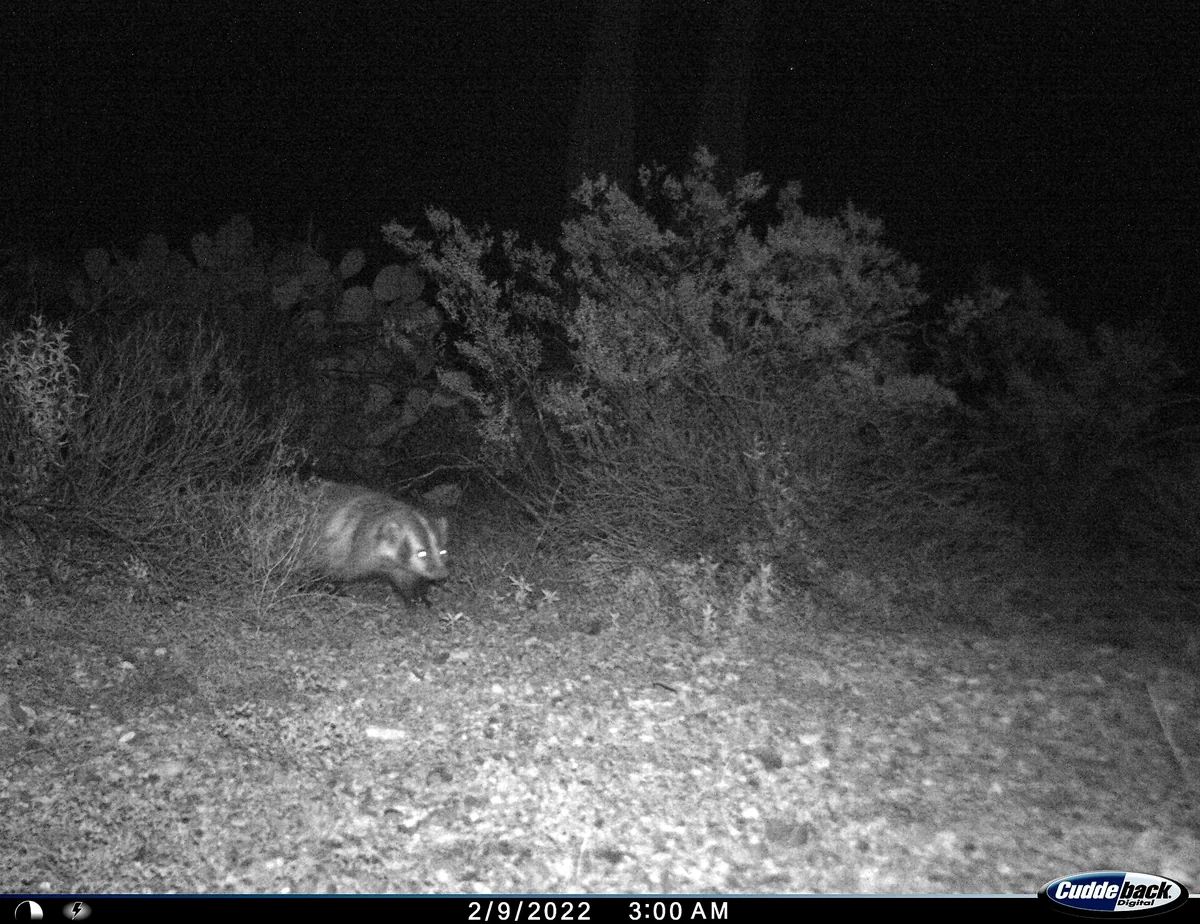
The Reconyx HyperFire 2 shoots 3-megapixel stills. That is roughly a twentieth of what a sixty-dollar camera advertises — and it is still the camera wildlife researchers buy. Understanding why is the fastest way to understand what megapixel counts on trail cameras actually mean.
Among the fastest and most durable cameras with independently measured figures. Held back on value and on daytime resolution, both of which are deliberate design choices rather than failures.
Scored on ten criteria applied identically to every camera on this site. See the method.
- Trigger speed, photo
- 0.20s
- Trigger speed, video
- 0.24s
- Detection range
- 80 ft
- Flash range
- 150 ft, no-glow
- Still resolution
- 3MP, up to 2 fps
- Video
- 720p with sound
- Operating range
- −20°F to 120°F
- Connectivity
- None — SD card
✓ marks a figure measured by TrailCamPro and linked above.
Why a 3MP camera outperforms a 48MP one
This is the single most useful thing on this page, so it is worth being precise about.
Megapixels describe how many pixels the sensor records. They say nothing about how good those pixels are. A large sensor with big photosites gathers more light per pixel, which is what produces a clean image in the conditions trail cameras actually work in — dusk, dawn, and under infrared at night. A cheap sensor with a huge pixel count gathers less light per pixel and then interpolates upward in software, inventing detail that was never captured.
Reconyx built the HyperFire 2 around the first approach. The result is a camera that produces a usable, low-noise image at night at a distance where higher-megapixel cameras produce grain. It also produces small files, which is why it can shoot two frames per second and why its batteries last as long as they do.
The practical consequence: if you are comparing trail cameras on megapixel count you are comparing the wrong number. The figure that matters is whether you can identify the animal, and at night that is decided by sensor quality, flash range and trigger speed — not by a number on the box.
What the measured 0.20-second trigger buys you
Measured photo trigger of 0.20 seconds puts this among the fastest cameras for which any independent figure exists. Against the GardePro T5NG Pro’s measured 0.51 to 1.4 seconds, it is between two and seven times quicker.
That matters in one specific situation: a trail where animals move through at a walk rather than stopping. A deer covers meaningful ground in a second, and the difference between 0.2 and 1.4 seconds is the difference between a broadside photograph and an empty frame with a tail leaving the edge.
It matters much less at a feeder, a water source or a scrape, where the animal is stationary and almost any trigger speed will do. Buying this camera for a site where subjects pause is paying a premium for a capability you will not use.
The 150-foot no-glow flash is the other headline figure
No-glow infrared is invisible to game and to people, and it normally costs range — a no-glow camera typically illuminates less far than a low-glow one at the same power. A measured 150-foot flash range on a no-glow camera is therefore unusual, and it is well beyond the camera’s own 80-foot detection range.
That mismatch is the right way round. Plenty of cameras detect movement at distances their flash cannot light, producing triggered photographs of darkness — one of the most common complaints we see. Here the flash comfortably covers everything the sensor can reach.
Buy it if the camera has to work unattended for years in hard conditions, on a travel corridor where animals move through rather than stop, and image identification matters more than image resolution. This is the research-grade choice and it earns that position on measured figures, not on marketing.
Look elsewhere if you want croppable, printable images, or if the site is a feeder where a slower trigger costs you nothing. At that point the money is better spent on a cheaper non-cellular camera and more of them.
How the HyperFire 2 compares on measured figures
| Camera | Trigger, photo | Detection | Flash | Stills |
|---|---|---|---|---|
| Reconyx HyperFire 2 HF2X | 0.20s | 80 ft | 150 ft | 3MP |
| Bushnell Core DS-4K | 0.15s | 80 ft | — | 32MP |
| Browning Strike Force HD Pro X | 0.22s | 80 ft | 120 ft | 20MP |
| GardePro T5NG Pro | 0.51–1.4s | 120 ft | 100 ft+ | — |
All trigger, detection and flash figures measured by TrailCamPro. Note that the camera with the lowest megapixel count has the longest flash range and one of the fastest triggers — which is the argument on this page in a single row.
Common questions about the Reconyx HyperFire 2
Is 3 megapixels really enough for a trail camera?
For identifying what walked past, yes. For cropping into a photograph or printing it, no. Sensor quality, flash range and trigger speed decide whether the image is usable at night; megapixel count does not.
Is the HyperFire 2 worth the price?
It depends entirely on deployment. For a camera that must run unattended for years in extreme temperatures, the durability and measured trigger speed justify it. For a backyard camera checked weekly, they do not.
Does the HyperFire 2 have a cellular version?
Reconyx make cellular variants in the same family. Those carry a data plan, and across three seasons the plan frequently costs more than the hardware — see what a cellular trail camera really costs.
Why is its detection range shorter than cheaper cameras?
Detection range and detection reliability are different things. A longer advertised range that fails in warm weather is worth less than a shorter range that triggers consistently. TrailCamPro note detection range varies substantially with air temperature on any camera.
The HyperFire 2 is the clearest demonstration on this site of why we label specifications. Its worst number by conventional comparison — 3 megapixels — sits on the camera professionals choose, while cameras advertising fifteen times the resolution are not in the conversation. Buy it for a hard, remote, long-term deployment on a travel corridor. Do not buy it for a feeder you check on weekends.